The short answer: both work, and the right choice depends on your structure and your priorities. AAC blocks are lighter, faster to build with, and far better at heat and sound insulation, which reduces structural load and electricity bills. Red clay bricks are stronger for hanging heavy loads, familiar to every mason, and time-tested. For a modern RCC-framed home in the NCR, AAC is often the smarter pick, but red brick remains a solid, dependable choice.
Walls are one of the few big material decisions a homeowner actually gets to weigh in on, and "we've always used red bricks" isn't a good enough reason on its own. The wall material affects your home's weight, insulation, comfort, construction speed, and even how much steel the structure needs. So it's worth understanding the real trade-offs before you decide.
What they are
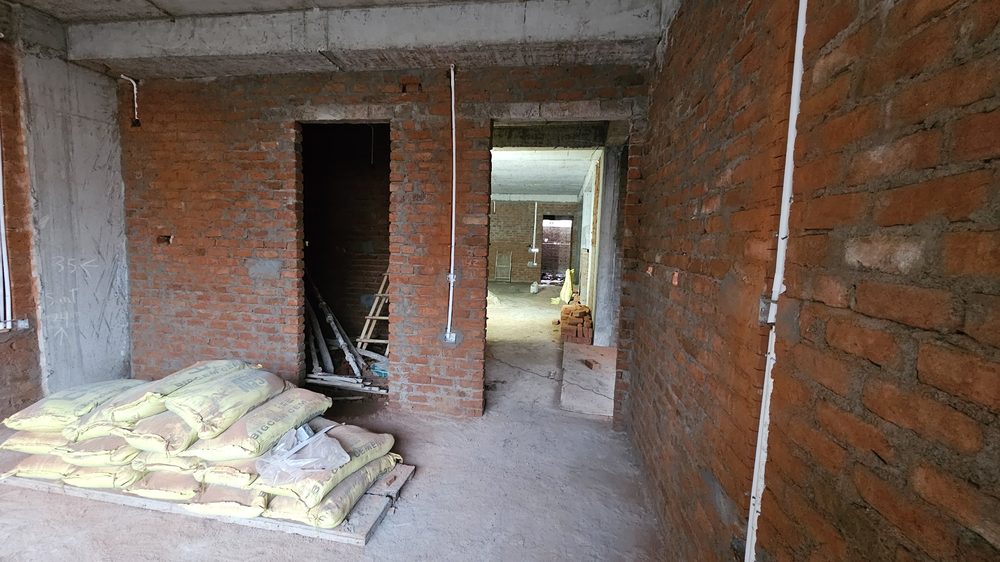
Red clay bricks are the traditional choice. Fired clay, used in Indian construction for generations. Every mason knows how to work with them.
AAC blocks, short for autoclaved aerated concrete, are a modern engineered material. Lightweight precast blocks full of tiny air pockets that give them their insulation. They're larger than bricks, so walls go up faster with fewer joints.
One point sits underneath everything below. In most modern homes the RCC frame carries the load and the walls are infill. That changes the priorities: weight and insulation often matter more than raw masonry strength.
Weight and structural load
This is AAC's biggest advantage. AAC blocks are dramatically lighter than red bricks.
- Lighter walls mean less dead load on beams, columns and foundation.
- That can translate into savings on steel and concrete in a framed structure.
- Red brick walls are heavier, and the structure has to carry that load.
Insulation and comfort
If you want a cooler home and lower bills, insulation matters, and here AAC clearly leads.
- AAC offers better thermal insulation, which means cooler interiors through a Ghaziabad summer.
- That insulation can cut air-conditioning costs over the life of the home.
- AAC also gives useful sound insulation between rooms.
- Red bricks insulate less, so interiors heat up faster.
Speed and mortar
- AAC blocks are larger and uniform, so walls rise faster with less mortar.
- Their precise dimensions give straighter walls and thinner plaster.
- Red bricks are smaller, so you need more units, more mortar and more time.
Strength and fixing loads
Red brick has a genuine edge where walls have to carry weight.
- Red brick handles heavy wall-mounted loads, like large units and heavy fixtures, more readily.
- AAC needs proper anchors and fasteners for heavy fittings. Easy enough to do, but it has to be done right.
- For load-bearing construction without a frame, red brick is often the safer traditional choice.
Cost, beyond the sticker price
Per block, AAC can look pricier than brick. That isn't the full picture.
- AAC's faster construction, lower structural load, thinner plaster and energy savings offset its unit cost.
- Red brick has a lower upfront unit price and is easy to source anywhere.
- The real comparison is total wall cost plus long-term running cost, not block price alone.
So which should you choose?
There's no universal winner, but there are clear best fits.
- Choose AAC for a modern RCC-framed home where you value insulation, speed, lower load and energy savings.
- Choose red brick for load-bearing construction, heavy fixing needs, or when you prefer a time-tested, locally familiar material.
- Either way, quality and correct workmanship matter more than the material itself.
The bottom line
Red brick and AAC are both good materials. They simply suit different priorities. AAC wins on weight, speed and insulation. Red brick wins on familiarity and heavy-load fixing. For most modern framed homes in the NCR, AAC's comfort and efficiency make it a strong choice, but a well-built red-brick home is in no way inferior.
A good builder won't push one blindly. They'll recommend the right material for your structure, climate and budget, then execute it properly. Our own specification names both, Class-A red brick or AAC block, decided against your drawings rather than against habit. Because in walls, as in everything, how it's built matters as much as what it's built from.
Frequently Asked Questions
Which is better, AAC blocks or red bricks?
Neither is universally better. AAC blocks are lighter, faster and better insulating. Red bricks are stronger for heavy fixings and time-tested. The right choice depends on your structure and priorities.
Are AAC blocks cheaper than red bricks?
Per block, AAC can cost more. Faster construction, reduced structural load, thinner plaster and energy savings often make the total cost competitive or lower.
Do AAC blocks keep the house cooler?
Yes. The air-pocket structure gives better thermal insulation, which keeps interiors cooler and reduces air-conditioning costs over time.
Can I hang heavy items on AAC walls?
Yes, but you need the correct anchors and fasteners designed for AAC. Red bricks handle heavy wall-mounted loads more straightforwardly.
Which material is better for an RCC-framed home?
AAC is often preferred for framed homes, because its light weight reduces structural load and its insulation improves comfort. Quality red brickwork also performs well.
Both are in our specification
Class-A red brick or AAC block, 10 ft floor-to-floor, with fibreglass mesh at every wall-column and wall-beam junction. Published before you sign.